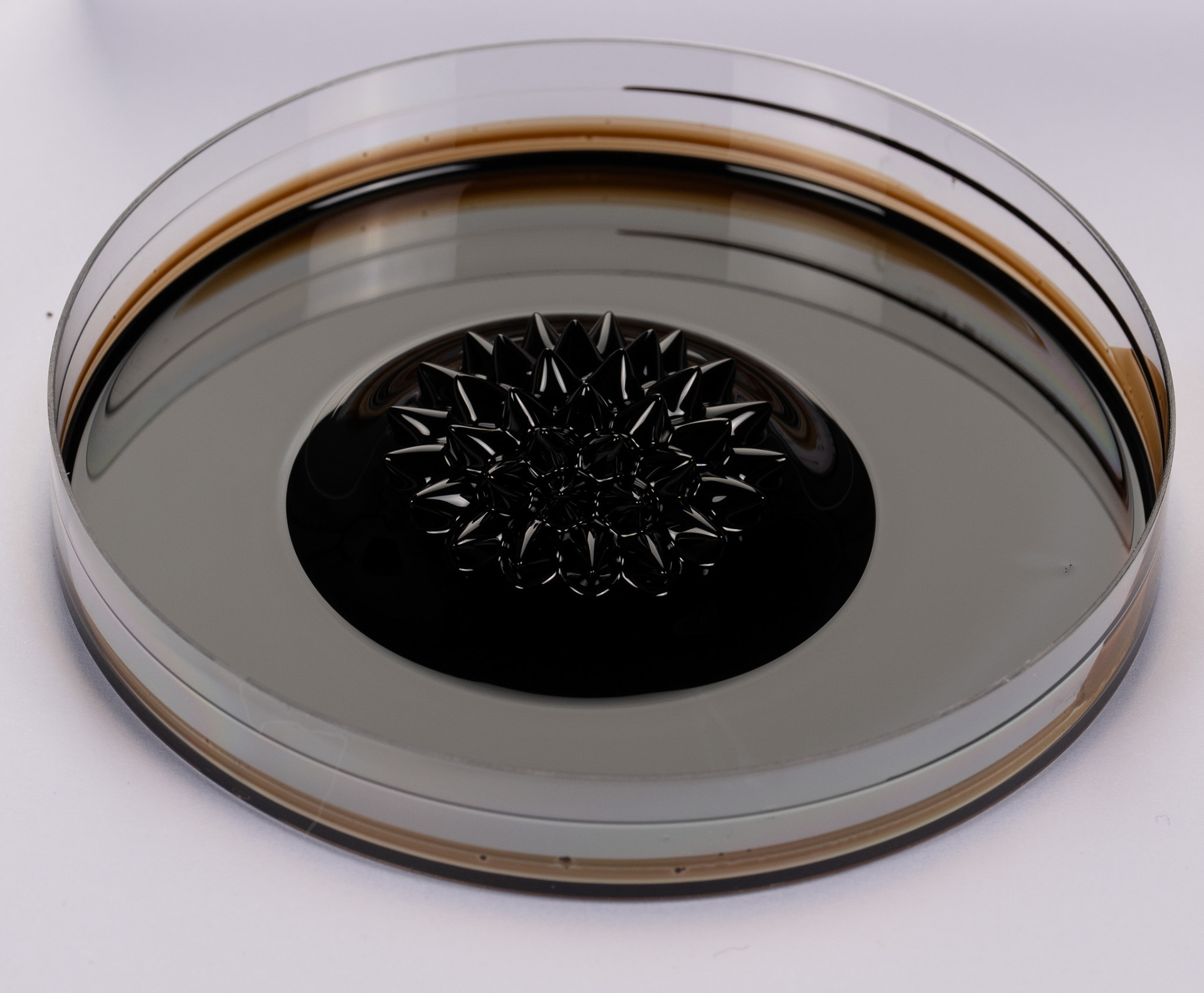
“Simulating Ferrofluids” is my bachelor thesis on how to bring magnetic liquid behavior into a contemporary CGI workflow. Starting from wet‑lab experiments with real ferrofluids, I captured reference footage and distilled their key visual traits: smooth bulging surfaces, concentric spike patterns, and field‑dependent spacing.
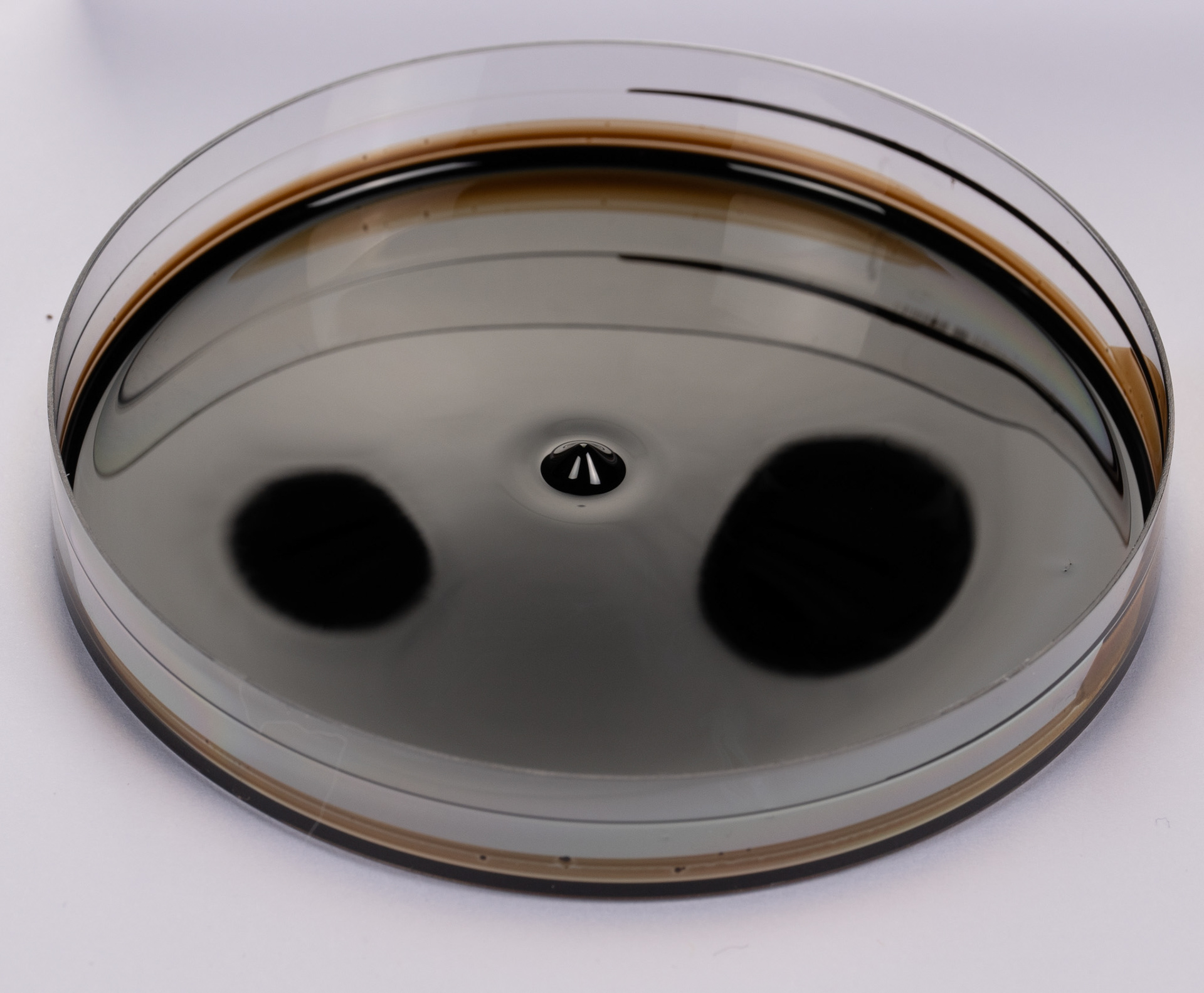
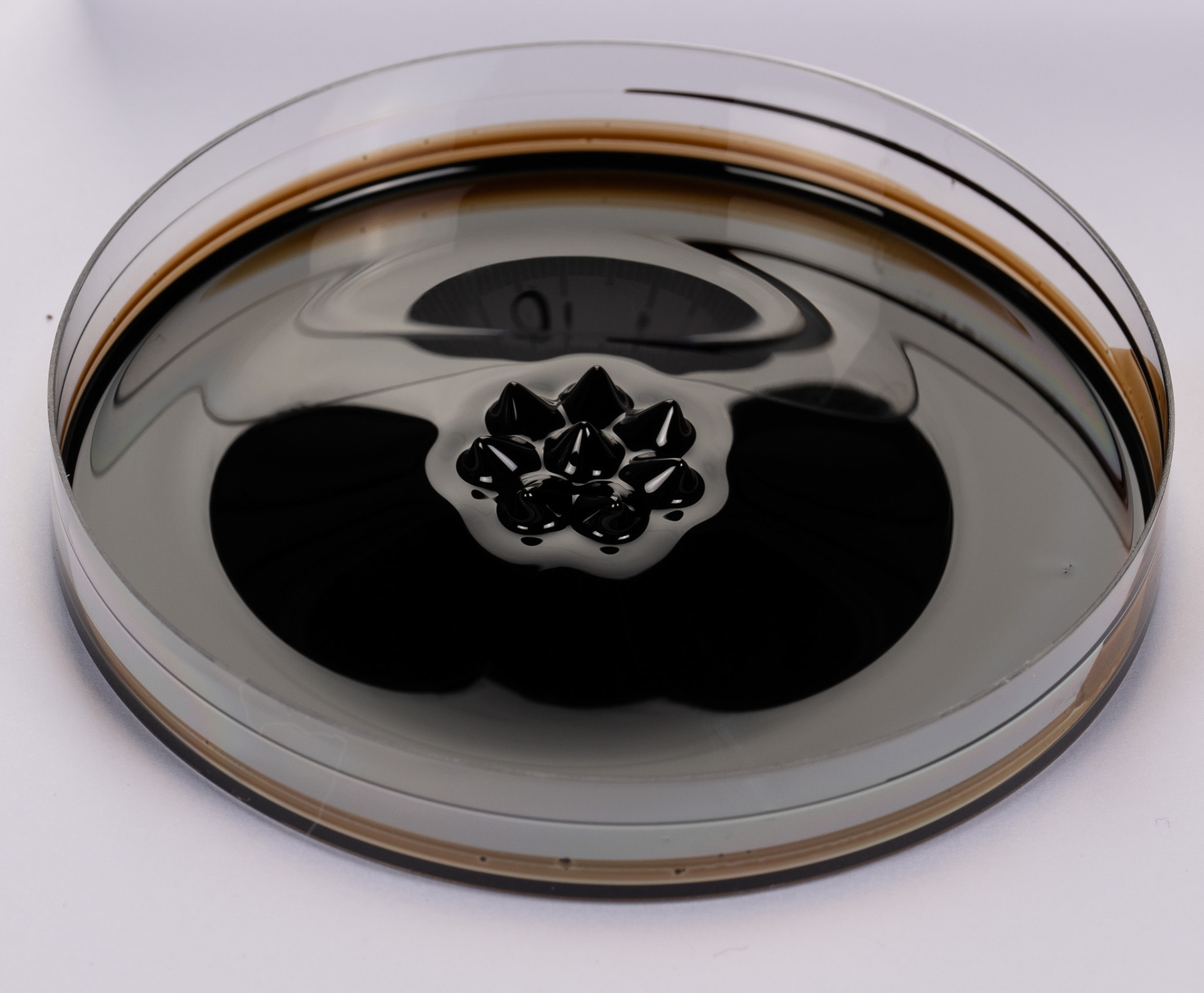
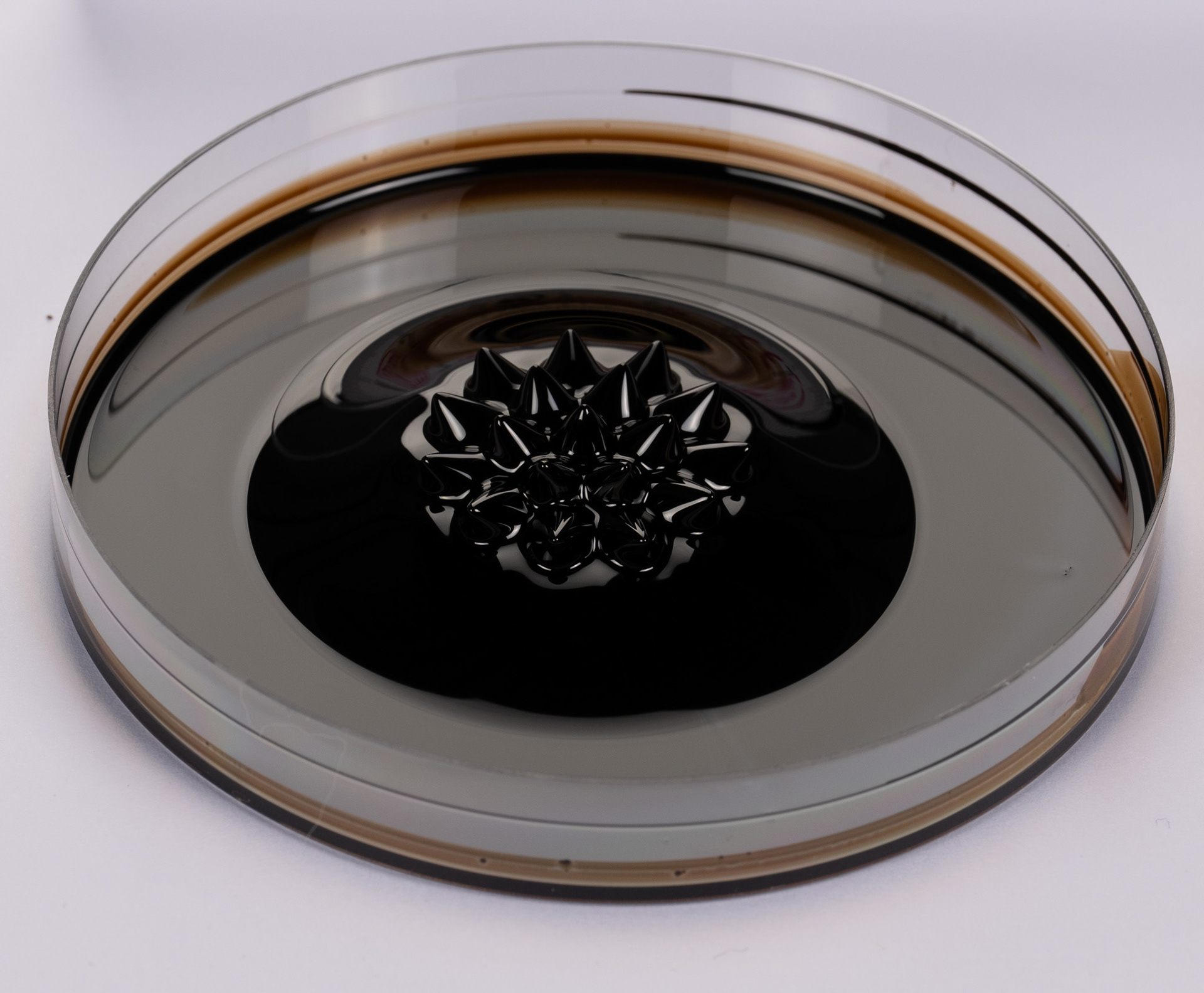
In Houdini, I implemented and tested two approaches side by side: a physically based IoB magnetostatic solver coupled to a FLIP simulation, and an specifically developed artistic, decoupled method that separates bulk fluid motion from spike formation. While the IoB setup could reproduce the underlying physics, it proved unstable in production scenarios (seen on the left). I developed a custom semi‑implicit surface correction (seen on the right) to improve boundary handling, which managed to stabilize the simulation in some cases, but still did not manage to get the setup production ready.
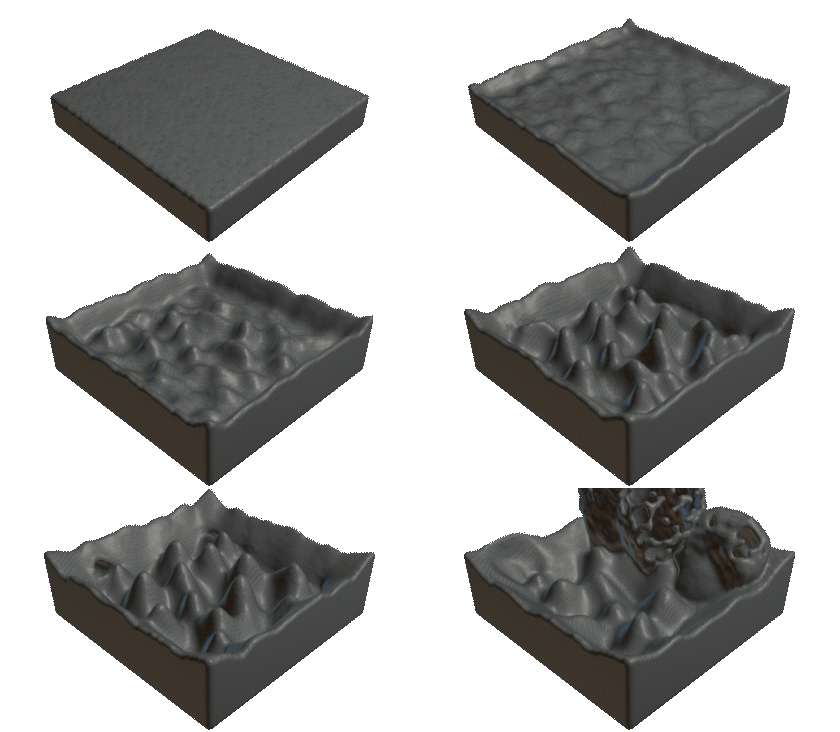
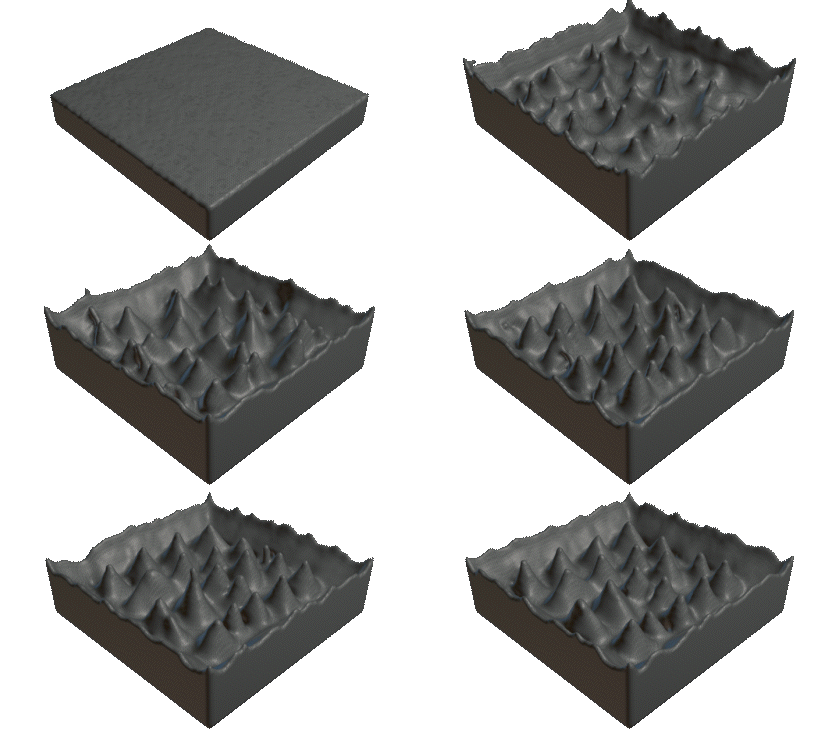
The decoupled approach instead uses a FLIP simulation to generate the characteristic bulge and drives spike growth via position‑based dynamics and procedural modelling on the reconstructed surface. This method closely matches the look of the wet‑lab footage (shown on the bottom right) while remaining fast, robust, and highly art‑directable, making it a practical solution for ferrofluid‑inspired motion design and VFX.
If you want to read the Thesis/Paper, feel free to contact me, i am happy to share it with anyone who's interested!